Cherokee, Forsyth, and Hall Counties, Georgia
Septic work in the North Atlanta exurbs starts with the county permit
Septic work here means drainfield replacement, new system installation, real estate inspections, and repair across Cherokee, Forsyth, and Hall counties. The big-ticket jobs all run through your county environmental health office first, so this site walks that process in the open.
Free for homeowners. How we make money is one short page.
The county permit comes first
Georgia septic work runs under DPH Rules Chapter 511-3-1, but each county board of health administers its own program. The office you call, the paperwork order, and the published fees differ across the three counties this site covers.
Cherokee County
Environmental health operates under the North Georgia Health District at 770-479-0444. Get the septic permit before you apply at the Development Service Center; the county checks it there.
Fees are set by the county environmental health office. Call for the current schedule; no schedule is published online.
Forsyth County
A published fee schedule, through Forsyth County environmental health in Cumming: $350 for a new residential septic permit at seven rooms or fewer, $550 at eight rooms or more, $150 for a residential repair, and $150 for an existing septic evaluation, read there 2026-09-14.
The performance evaluation is the county product many home sales lean on.
Hall County
Environmental health operates under District 2 at 770-531-3973. Install inspections are booked into same-day windows between 8 and 9 a.m., which shapes how contractors schedule work.
Fees are set by the county environmental health office. Call for the current schedule.
Sources: Georgia DPH onsite sewage program, the North Georgia Health District, Forsyth County environmental health fee schedule, and District 2 Public Health.
Where the planning usually lands
Drainfield replacement
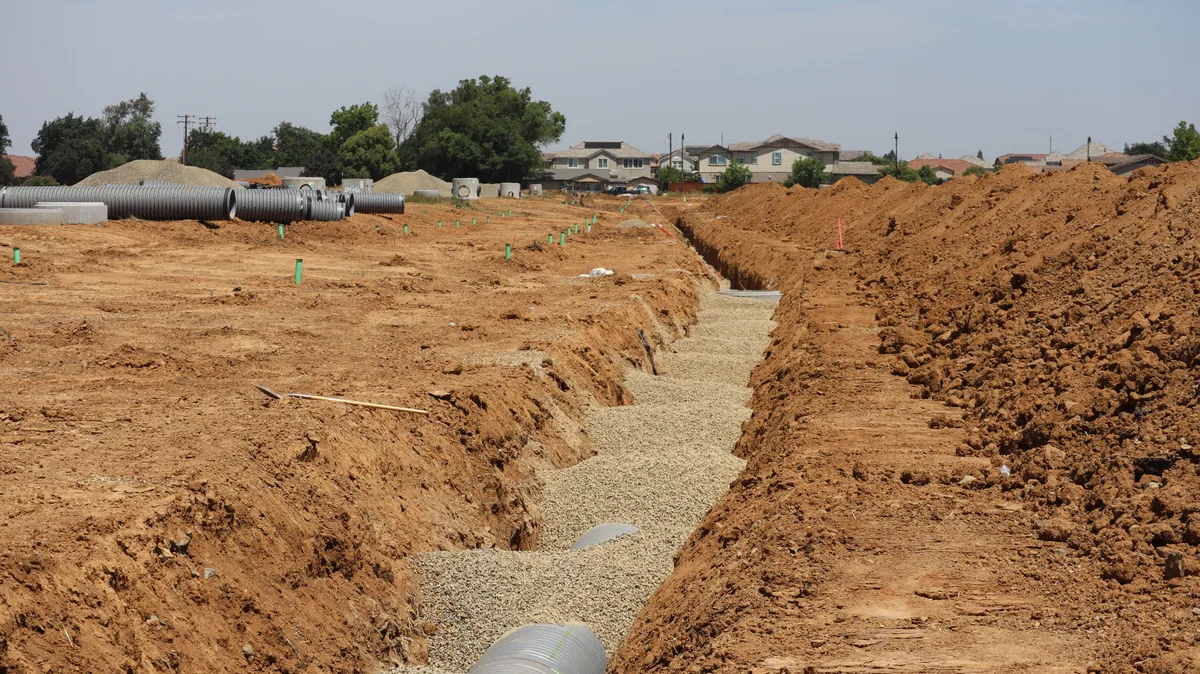
The highest-ticket work a septic system ever needs, and the most common big job in this soil. A soggy or slow drainfield in Piedmont clay is usually a planning decision, not an emergency: the county evaluates the soil, permits the repair, and a state-certified installer rebuilds the field.
The drainfield replacement pageNew septic installation
Cherokee (about 299,000 people) and Forsyth (about 282,000) each grew about 2.4 percent in the year ending April 2025, per ARC estimates, and much of that growth builds on septic. On new construction the septic permit comes before the building permit, so the soil evaluation is the first call, not the last.
Plan a new installationThe permit process, explained
Application, soil evaluation, certification checks, inspection: our North Georgia septic permits guide walks all three counties step by step, with office contacts and the paperwork order, so you can check every claim a contractor makes against the county process itself.
Read the permits guide
Red clay is the whole story
Most of the North Atlanta exurbs sit on Cecil-series soil, the classic Georgia Piedmont profile: a thin topsoil over deep red clay over saprolite. That clay percolates slowly, which is why drainfields that would last decades in sandy soil struggle here, and why the University of Georgia Extension (Bulletin 1535) recommends sizing drainfields from measured saturated hydraulic conductivity rather than assumptions. It is also why the county soil evaluation matters more than any sales pitch.
Source: UGA Extension Bulletin 1535, Georgia Piedmont soils and onsite wastewater.
The Cecil profile
- A horizon: thin sandy loam topsoil
- B horizon: deep red clay, slow percolation
- C horizon: saprolite, weathered granite
From one form to a written quote
-
Tell us what is happening: county, situation, and system age if you know it. The form takes about a minute.
-
Your request goes to an independent licensed septic contractor who handles your kind of job in your county.
-
The contractor contacts you directly and quotes directly. You decide, and you can check their Georgia DPH certification before you sign anything.
We are paid a referral fee by the professional, never by you. Details on the how we make money page.
Septic country north of Atlanta
Cherokee, Forsyth, and Hall counties: Canton, Woodstock, Ball Ground, Cumming, Gainesville, Flowery Branch, and the septic country between them. The Metropolitan North Georgia Water Planning District reports that one-tenth of all wastewater generated in the district is treated by onsite septic systems, and the exurban belt north of Atlanta holds a large share of them: aging systems on the older lots, new installs on the growth edge.
County and city pages with local permit contacts and soil context are publishing batch by batch; the service areas page tracks the list.
Source: Metro Water District, Wastewater in Our Region, northgeorgiawater.org, read 2026-09-14.
Frequently Asked Questions
Who does the septic work?
Independent licensed local septic contractors do. Georgia certifies septic installers and pumpers at the state level through the Department of Public Health, so ask any contractor for their DPH certification.
Do I need a permit to replace a drainfield in Georgia?
Yes. Under Georgia DPH Rules Chapter 511-3-1, repair and replacement of an onsite sewage system runs through your county board of health. The county environmental health office performs the site and soil evaluation and issues the construction permit before work begins in Cherokee, Forsyth, and Hall counties alike.
Is a septic inspection legally required to sell a home here?
No. Georgia has no statewide point-of-sale septic inspection mandate, and Cherokee, Forsyth, and Hall counties do not impose one. Inspection requests almost always come from the lender: FHA, VA, and some conventional loans ask for a septic evaluation before closing. Forsyth County environmental health also offers a $150 performance evaluation.
What does this cost me?
Nothing for homeowners. The contractor pays a referral fee, and it never increases the price you pay for your project. The full explanation is on our how-we-make-money page.
Start with one form
Whether the drainfield is wet, the builder needs a soil evaluation, or the lender wants an inspection before closing, the next step is the same: describe the situation and get a free quote on the work.
Monday to Friday, 8 AM to 5 PM Eastern
Or call (770) 343-2341Get a Free Quote
What it costs, and what happens after you send it
- What does septic work cost in North Georgia?
- Published figures put it in five figures for the big jobs: a conventional drainfield replacement runs $3,000 to $15,000 (HomeGuide, 2026), a tank and drainfield replaced together run $5,000 to $12,000 (Angi, 2026), and a new conventional system installed runs $3,500 to $8,500 (HomeGuide, 2026). Those are national cost guides rather than a Georgia dataset, and North Georgia clay is the local factor they cannot see: tight soils are what push a system toward an alternative design and the upper end of any range. County permit fees are separate from what a contractor charges. Forsyth and Hall counties each publish a schedule, and the two land close together: $150 for a residential repair permit, $350 for a new residential system at the smaller size band. Cherokee publishes none and sets fees at the office. The Georgia cost guide prints the full table with every source.
- How fast will someone get back to me?
- Your request goes to an independent licensed local septic contractor, usually within about an hour during the day. That contractor then contacts you to look at the system and price the work on their own schedule.
- What work is covered?
- Drainfield replacement, new septic installation, septic repair, alternative systems for clay soils, system design and permitting, real estate inspections, and pumping. See every service.
Only a contractor standing on your property can price your actual system.
Updated